Automatic is easier. Manual gives you more freedom.
That's the short answer, but choosing the right one depends on your situation, your goals, and the kind of driver you want to be.
Quick answer
Choose manual if you want full flexibility and don't mind a challenge.
Choose automatic if you want an easier, faster route to passing.
Before deciding, it helps to understand how many lessons you might need and what to expect from your first driving lesson.
This page breaks down the differences honestly, so you can make an informed choice before you book your first lesson.
What's the actual difference?
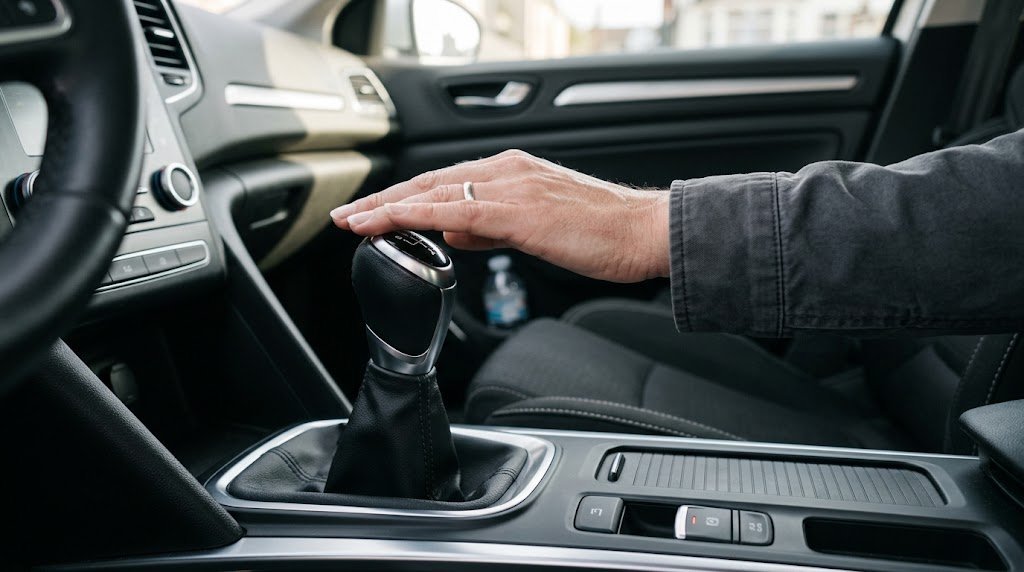
In a manual car (also called a stick shift or standard), you control three pedals (accelerator, brake, and clutch) and manually change gears using a gear stick. Getting the coordination right takes practice, but it gives you full control over how the car behaves.
In an automatic car, the gearbox changes gears for you. There's no clutch pedal, so you only deal with two pedals and can focus more of your attention on the road. Many modern cars, including most electric vehicles, are automatic.
| Feature | Manual | Automatic |
|---|---|---|
| Pedals | 3: clutch, brake, accelerator | 2: brake and accelerator |
| Gear changes | You control them | The car handles it |
| Licence restriction | Can drive both manual and automatic | Automatic only |
| Learning curve | Steeper initially | Generally quicker to pick up |
| Available car choice | Very wide | Growing rapidly (especially EVs) |
| Typical running costs | Often slightly lower | Varies: EVs can be cheaper to run |
Pros and cons of each
Here's a straightforward look at both sides, no sugarcoating.
- Licence lets you drive both manual and automatic
- Wider choice of cars to buy
- Considered the traditional, versatile skill
- Typically cheaper to buy at lower price points
- Steeper learning curve, especially on hills and in traffic
- Stalling is common early on and can be frustrating
- More to think about at once as a beginner
- Simpler to operate, easier to focus on the road
- No stalling, no clutch, less initial frustration
- Well-suited to city and stop-start driving
- Many learners pass more quickly
- Automatic-only licence: you can't legally drive a manual
- Fewer lower-cost cars available (though this is changing)
- Upgrading to manual later requires a separate test
How your choice affects your driving licence
This is probably the most important practical consideration, so it's worth being clear about it.
If you pass your test in a manual car, your licence is unrestricted: you can legally drive both manual and automatic vehicles from day one.
If you pass your test in an automatic car, your licence carries an automatic-only restriction (category code 78). This means you cannot legally drive a manual car unless you pass a separate manual test at a later date.
Worth thinking about long-term
If there's any chance you'll want to drive a manual car in the future (borrowing a friend's car, driving abroad, or buying a van for work), a manual licence keeps all your options open. If you're confident you'll only ever drive automatics (including electric vehicles), the restriction won't affect you in practice.
The automatic restriction can be removed at any point by passing a manual driving test. It does not expire, and there's no rush, but it is an extra test and extra cost if you change your mind later.
Lessons, cost, and time to pass
Does it cost more to learn in an automatic?
Lesson prices vary by instructor and area, but automatic lessons often cost slightly more per hour because automatic cars tend to be more expensive to buy and run. However, some learners find they need fewer lessons in an automatic, particularly those who struggle with clutch control, which can balance out overall.
General guidance: The DVSA doesn't publish a recommended number of lessons, but research suggests the average learner takes around 45 hours of professional tuition before being ready to test. Learners in automatics sometimes reach test standard faster, but it varies enormously by individual.
Will I pass faster in an automatic?
Possibly, but not necessarily. The driving test itself is largely the same format in both. Without clutch control to master, some learners feel they can devote more attention to hazard perception, positioning, and observation earlier in their training. Others find the opposite to be true personally.
The best predictor of passing quickly isn't the type of car: it's consistent practice between lessons and a good working relationship with your instructor.
What about electric vehicles?
Almost all electric vehicles are automatic, so if you're planning to drive an EV in the future, learning in an automatic is a natural fit. As the UK transitions away from petrol and diesel cars, the practical difference between the two licences may matter less over time, but for now, a manual licence still offers the widest flexibility.
Which is right for you?
There's no universal answer, but here's a practical guide based on common situations.
Manual might suit you if…
- You want maximum flexibility with your licence
- You're not in a hurry and want to build a solid foundation
- You plan to buy a budget second-hand car
- You might need to drive vans, older vehicles, or borrowed cars
- You enjoy the feeling of being in full control of the car
- You're travelling or working abroad where manual is the norm
Automatic might suit you if…
- You mainly drive in busy city or urban traffic
- You find clutch control particularly difficult or stressful
- You have a physical condition affecting clutch or gear use
- You plan to drive an EV or modern automatic car
- You want to pass as efficiently as possible
- You're returning to driving after a long break
If you're genuinely unsure, it's worth having a conversation with your instructor before you commit. A good instructor will help you think through your situation rather than just pushing you toward one option.
Common questions
Can I switch from manual to automatic lessons halfway through?
Yes, but it typically means starting again in a different car, and your instructor may not teach in both. It's worth deciding early to avoid wasting time and money. That said, some learners do switch, and it can be the right call if clutch control is causing significant progress issues.
Is automatic easier to pass the test in?
The test format is the same regardless of vehicle type. Automatic removes clutch control from the equation, which simplifies one aspect of driving, but the examiner still assesses the same areas: observation, hazard perception, road positioning, and independent driving. Neither is objectively easier; it depends on the individual learner.
If I pass in an automatic, can I drive a manual later?
Only if you pass a manual driving test. There's no time limit: you can do this years later if you decide you need to. The test would be a standard practical driving test, taken in a manual car.
Are automatic lessons more expensive?
Often slightly, yes, but not always significantly. The bigger factor is usually the total number of hours needed, which is individual. It's worth getting quotes from local instructors for both and asking what they'd recommend given your circumstances.
What if I have a disability or medical condition?
Automatic vehicles are often better suited to drivers with conditions affecting clutch or gear control, for example limb differences or certain mobility impairments. The DVLA may also require specific vehicle adaptations. It's worth speaking to your instructor and, if needed, getting advice from a mobility specialist before choosing a vehicle type.
You might also find useful
Please note: This is general driving guidance, not a substitute for in-car instruction. The real situation in front of you, and what your instructor tells you, always takes priority over anything written on this page.
Keep Building Your Driving Knowledge
Whether you've decided on manual or automatic, explore our free guides to build your knowledge before your first lesson.
View All Driving Guides