Before a single wheel turns, every drive starts with the same short routine: Doors, Seat, Steering, Seatbelt, Mirrors, DSSSM for short. You'll do this on your first lesson, your last one, and your test itself, so it's worth understanding properly rather than just memorising the letters.
Why the Order Matters
The sequence isn't arbitrary. Each step depends on getting the one before it right. Move your seat after setting your mirrors and you'll need to readjust the mirrors anyway, because your eye position has changed. Doing it in the same order every single time also means it eventually becomes automatic, something you do without thinking, rather than a checklist you're mentally working through under pressure.
Doors
Check every door is properly closed, not just resting shut, listen and feel for a firm, complete latch rather than trusting a dashboard light alone. Confirm the handbrake is on and the gear is in neutral (manual) or park (automatic) before you go any further.
Seat
Move the seat forward or back until you can press the clutch (manual) or brake (automatic) fully to the floor with a slight bend still left in your knee, not a straight leg. Adjust the height so you have a clear view over the steering wheel and bonnet. Set the backrest so your shoulders rest against it without slouching or stretching forward, and check the head restraint sits level with the top of your head, not your neck, since that's what it's actually there to protect in a collision.
Steering
Adjust the wheel's reach and height if your car allows it. Your arms should have a comfortable, relaxed bend when holding the wheel, enough to turn it fully in either direction without overstretching or locking your elbows.
Seatbelt
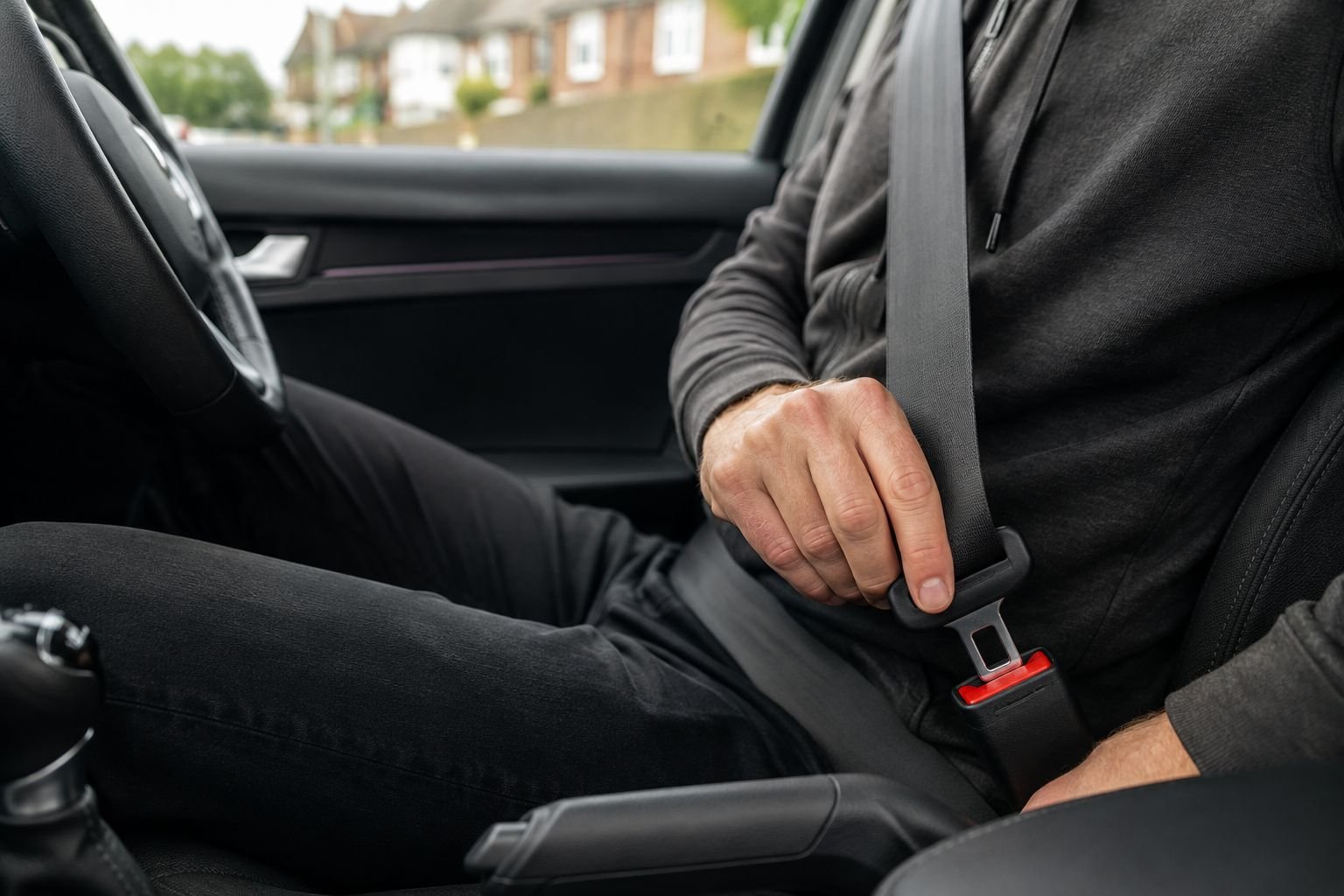
Fasten it so the belt lies flat across your collarbone and hips with no twists. You're legally responsible for making sure any passenger under 14 is also properly secured before you move off.
Mirrors, Always Last
Set the interior mirror so it frames the whole of the rear window, then adjust each door mirror so you can see a small sliver of your own car alongside a wide view of the road behind. Mirrors go last for a reason: everything before this step changes your eye position, so setting them any earlier just means doing it again once your seat's actually finished moving.
It's Not Just for Lesson One
This isn't a one-time introduction, it's something you'll do at the start of every single lesson, every private practice session, and on the test itself. If someone else has driven the car, or even if you've just got out and back in, your seat and mirrors may no longer be right. Speed isn't the goal early on, getting it right every time is; it becomes quick on its own with repetition.
Frequently Asked Questions
What does DSSSM stand for?
Doors, Seat, Steering, Seatbelt, Mirrors, the routine you complete before every drive.
Why do mirrors come last?
Because your seat and steering position affect what you can actually see in them. Adjusting mirrors before you've finished the seat and steering usually means adjusting them again anyway.
Do I need to do the full drill on every lesson, not just the first?
Yes. It's performed every time you get in to drive, not just as a one-off introduction.
Is the cockpit drill formally marked on the driving test?
It's not a separately scored item, but doing it properly shows good habits, and getting your seat or mirrors wrong can contribute to other faults later in the drive.
How long should it take?
With practice, well under a minute. It's completely fine to take longer while you're still learning the sequence.
You Might Also Find Useful
Please note: This is general driving guidance, not a substitute for in-car instruction. The real situation in front of you, and what your instructor tells you, always takes priority over anything written on this page.
Keep Building Your Driving Knowledge
Whether you've decided on manual or automatic, explore our free guides to build your knowledge before your first lesson.
View All Driving Guides